
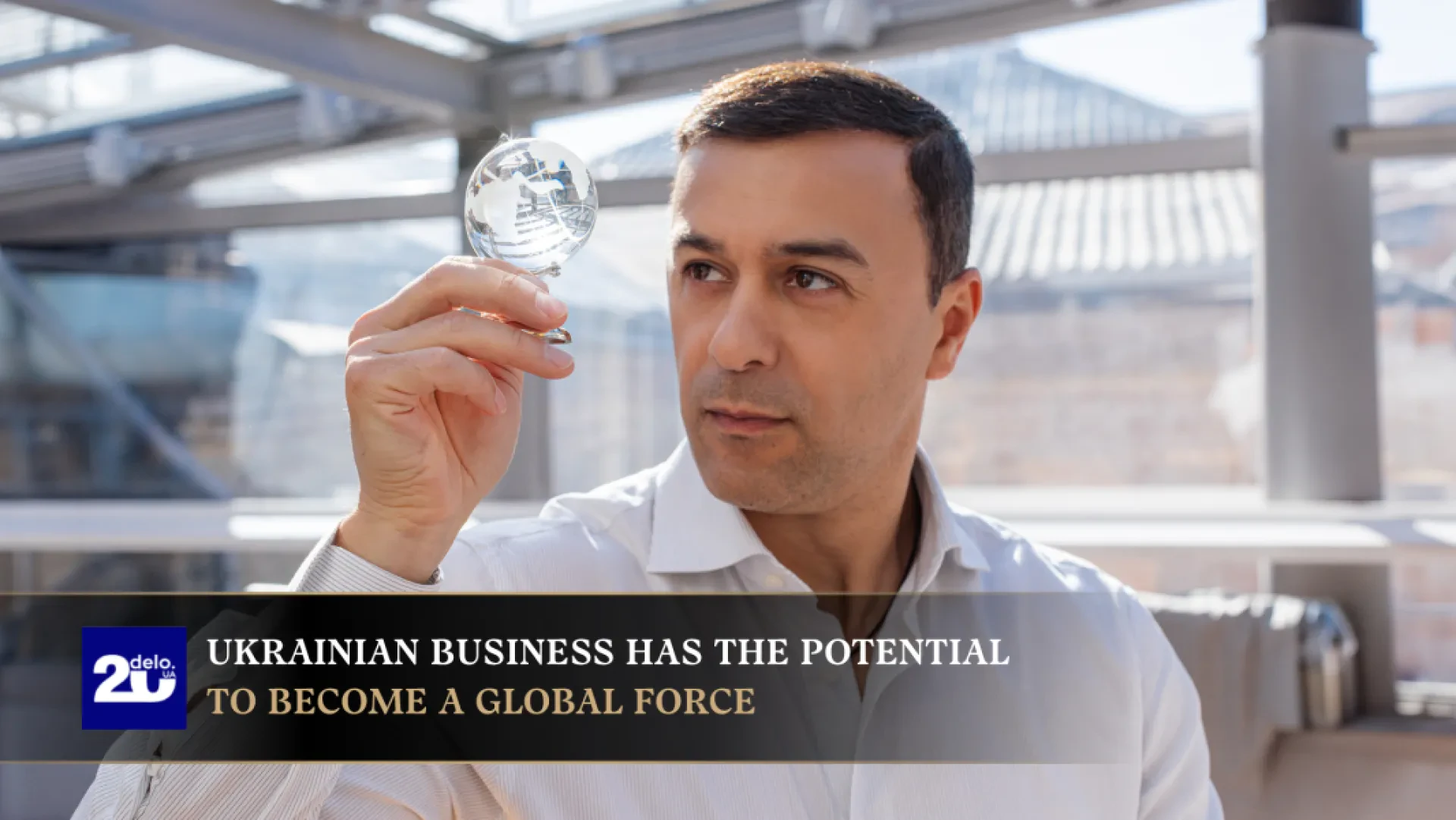
For the first time in decades, Ukraine has gained something truly invaluable: the world's trust, attention, and respect. But this kind of intangible capital does not last forever. Unless we transform it into long-term relationships, business partnerships, investments, joint initiatives, and stronger connections among Ukrainians around the world, this historic window of opportunity will eventually close.
Ukrainians have already proven that they can succeed on the global stage. Our entrepreneurs, investors, researchers, and business leaders are building successful careers and businesses across dozens of countries, often achieving remarkable results.
The real question is whether we can turn hundreds of individual success stories into a collective force. In today's world, influence is shaped less by individual companies or exceptional people than by trusted communities that bring together talent, capital, and opportunity in pursuit of ambitious shared goals.
The World Came to Know Ukraine Through Its People
One of the war's most unexpected consequences has been a profound shift in how the world sees Ukrainians.
Before the full-scale invasion, Ukraine was often judged through the lens of its state institutions, political crises, corruption scandals, and the chronic challenges that had shaped the country's image for years. That perception largely defined how Ukrainians themselves were viewed.
When Russia launched its invasion, most international analysts predicted that Ukraine would fall quickly. They assessed the country's institutions and military capabilities, but they largely overlooked its people.
The war revealed a very different Ukraine — one defined by volunteers, entrepreneurs, soldiers, public leaders, and engineers. By people accustomed to relying on themselves, coming together quickly around a shared purpose, taking responsibility, and finding solutions in situations where none seemed to exist.
In many ways, the world discovered Ukrainians anew. Not through political institutions or international rankings, but through the actions of millions of ordinary people.
At the same time, perceptions of Ukrainians began to change. Increasingly, we are no longer seen as people from Europe's periphery or as citizens of a country forever trying to catch up. Instead, there is growing respect for those who know how to build, adapt, organize complex systems, and find solutions where conventional approaches no longer work.
Yet international recognition of individual Ukrainians does not, by itself, create real influence. That influence emerges only when successful individuals combine their knowledge, capabilities, and the trust they have earned into a lasting network of collaboration.
Why Ukrainians Need to Think Beyond a Diaspora and Start Acting as a Network
Over the course of the war, Ukrainians have established themselves in dozens of countries around the world. Among them are entrepreneurs, investors, business leaders, researchers, and technology innovators. Yet simply being present across different countries does not, in itself, create an advantage.
The world is not short of connections. Business events, professional communities, and social media make it possible to meet almost anyone. What is far more difficult is building an environment where those connections are grounded in trust, shared experience, and a willingness to work together.
At first glance, the difference between networking and being part of a team may seem subtle. A contact can offer advice, make an introduction, or point you in the right direction. A trusted network can help turn an idea into reality.
For an entrepreneur entering a new market, the greatest asset is often not information but people who have already been there. People who understand the local context, have built strong reputations and partnerships, possess firsthand experience, and can shorten years of trial and error into just a few conversations.
The more people are connected by trust, the greater the collective impact becomes. Experience, expertise, relationships, and opportunities stop belonging to individuals and begin to function as a shared resource.
Imagine hundreds of entrepreneurs working across different countries and industries, each with their own experience, expertise, and trusted relationships. It quickly becomes clear how dramatically the scale of opportunity changes. In such an environment, an idea is far more likely to grow into an international venture than in a situation where everyone is working in isolation.
In my view, this is the next stage in the evolution of Ukraine's global presence. It is not enough for Ukrainians to succeed in different countries; we must learn to turn our globally distributed presence into a shared strategic asset.
And this matters not only for Ukraine. Around the world, success is increasingly driven not by individual organizations, but by trusted ecosystems capable of bringing together people, knowledge, capital, and credibility around ambitious shared goals.
These are the environments that increasingly give rise to new companies, investments, technologies, and influence. History shows that at pivotal moments, those who learn to work together before others gain the advantage.
A Lesson Others Have Already Learned
History offers countless examples of transformative change driven not by the discovery of new resources, but by new ways of bringing people together.
This was true of the great Mediterranean trading republics, which built networks that extended far beyond their own territories. It was true of Jewish entrepreneurial communities, which sustained their influence for centuries through trust, knowledge, and relationships that spanned countries. And it was true of the Chinese business networks of Southeast Asia, where horizontal ties often proved more effective than formal institutions.
In each of these cases, success was determined not by the number of people involved or the amount of capital they possessed. What mattered was the ability to unite dispersed talent, resources, and capabilities around a shared purpose.
It seems to me that we are living through a similar moment today. The world is becoming increasingly unpredictable, and many of the models that once appeared stable for decades are steadily losing their effectiveness. At times like these, most people naturally focus on preserving what they have, minimizing risk, and waiting for the turbulence to pass.
Yet the greatest opportunities do not belong to those who defend themselves most effectively against change. They belong to those who dare to create new forms of collaboration, build new ecosystems, and redefine the rules of the game.
The question, then, is not simply how to adapt to a changing world. A far more interesting question is who will help shape the world's next chapter.